Posts

First Wave Arab Immigrants
Image
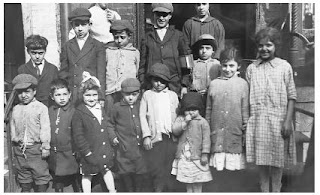
Arabs have been immigrating to the United States since the late 19th century. These Arabs immigrated for economic reasons, hoping to strike it rich and then go back to their native homelands. Very few of the first Arab immigrants expected to lay down roots in America and establish communities similar to their own in the old country. But they did, like most all other immigrants, and became woven into the fabric of American history. The first Arabs to set foot on American soil came primarily from Syria and Lebanon. They were majority Christian, Assyrian Orthodox, Maronite, or Melkite. When they entered Ellis Island for the first time, they were asked, "Where are you from?" Even further, they were asked to categorize themselves according to race and color, something immigrants knew little to nothing about. Ellis Island officials handled these cases by mislabeling these early immigrants. Historical census sources dated back to the late 19th century and early 20th century had misl...

History of the Israeli-Palestinian Conflict

Image
Very little is known about the true history of the Israeli-Palestinian conflict. Most historians and politicians like to surrender their hands in the air when this issue is brought up, wailing "Oh! This has been going on since the beginning of civilization!" Not true. Since the beginning of civilization, tribes roamed the area labeled, the Holy Land. This area stretched from northern Asia Minor, including Syria, parts of Turkey and Armenia and moving southward into Judah and Samaria, the area bordering the Sinai peninsula. Tribes of Amonites, Sumerians, Canaanites, Hittites, Assyrians, Phoenicians, and the list goes on. The Israelites were a brand of Canaanites who had been led by their father, Abraham, and promised a land unto themselves, the land of Canaan (aka, Israel today). Jews, as they ascribed religiously, believed in one God, a God who finally revealed Himself to them as YHWH under the leadership of Moses. This God was one who not only promised land to the Israelites...

Gender in Ancient Sparta

Image
Patriarchal systems existed since paleolithic times, rendering the art of machismo and paternal power. Male dominance was defined by the patriarch as the fundamental unit of power in ancient society. The clan was only as strong as its male head of the household, building and influencing a generation of sturdy and brisk men who would soon take over the roles that defined them. However, if men inherited this machismo, women enabled it. Women were expected to tend to their men, submit to them, and raise them. But they also proved themselves the purveyors of this masculinity, sometimes engaging in cross-dressing practices, prostitution, and even serving in wars against enemy militias. Nowhere is this more evident than in ancient Spartan society. Spartan society stretched the envelope for women, displaying an implicit gender-bending reality in a society that Aristotle labeled "lawless". Furthermore, ancient Spartan women partook in many interesting social practices that people of ...

The Gupta Realms

Image
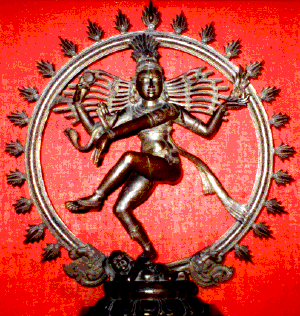
The Indian civilization is thousands of centuries old. What do we in the west know about this ancient civilization? What has Indian culture brought to our world history and how can we better our societies by incorporating Hindi customs to our everyday living? The ancient Dravidians, a pastoral and semi-literate people, inhabited the Indus Valley as far back as 2600 B.C. It was not until the Aryan peoples (semi-nomadic warriors from the central Asian steppes) invaded northern India, pushing the dark-skinned Dravidians southward past the Deccan plateau. The Aryans were a Vedic peoples, ascribing hymns and sacrifices to their gods and incorporating a caste-system based on varna or skin color. The highest caste were the priests of this group, known as the Brahmans, who were the lightest skin shade and helped shape Hindu culture to what it is today. The Brahmans were deeply aescetic people, worshipping the gods in public and often times chastising those who did not devote themselves to the ...

Thomas Jefferson's American Legacy

Image
When American historians recall the arduous democratic and constitutional process of this country, they often attribute this process to the determined and tenacious founding fathers. One man in particular, Thomas Jefferson, goes down in history as the 'man behind the true democratic experiment' - unconventional, private, and paradoxical. How much do Americans really know about this man who drafted the Declaration of Independence? What were his passions, fears, and beliefs for democracy? How and why is he still looked at as the 'father of American democracy?' And most importantly, would his views on race muddy his reputation as America's leading founding father? Jefferson was complex, a young widowed man who spent most of his presidency in his room writing and reading on science and invention. He spent most of his life at his rural Virginia manor of Monticello. His tastes derived from French aristocracy and naturalistic elements engrained in the Deist ethos of the en...

Why Understanding the 'Other' is Essential to Understanding Ourselves

Image
As a Christian American with Arab roots, I was raised with the essential understanding that the more we know about others, the more we learn about ourselves. Americans and many Westerners have the impression that Arabs and other cultures have a very narrow view of the world, since they come from a homogeneous and paternalistic society rooted in their own philosophies seperate from 'the West'. However, I must contend with this viewpoint. Arab culture as well as all cultures of the world are far from homogeneous. Islam, Zoroastrianism, Christianity, Sufism, Judaism, along with different cultural practices pervade the Middle East, creating a cohesive religious diversity that most societies envy. Although politics is really the point of all contention in all societies, religion has always been a significant cause for Arab identity--causing many to live their lives by their faith and practice. Even moreso, because Arabs in the Middle East come across Christians, Muslims, and Jews on...

The Spirit of Capitalism

Image
Although Aristide Boucicaut was the first to introduce retail consumerism to Paris in 1838 with his 'Bon Marche', the concept would transport and greatly expand itself throughout New York City only ten years later. Interestingly enough, 1848 was the year Karl Marx would write his revolutionary 'Communist Manifesto', detailing the phases of capitalism and the globalized economy. How would America join on the 'capitalism train'? And why would socialism pervade amidst this growing economic boom? The Department Store was by far America's ticket to economic success. Upper class women could now find Parisian-style fashions just minutes from their 'millionaire-row' homes, instead of having to travel the distance abroad to obtain these fashions. Even moreso- dresses, shoes, hats, and men's suits could be purchased at a relatively affordable price. By the 1920 s, many of these items could be purchased in mass consumption, thus propelling the capitalistic...